
Water
Impact on our Water
Your digital trash is making data centers thirsty. Because data centers require immense amounts of water—both directly for cooling servers and indirectly through the water used to generate the electricity that powers them—cleaning up digital waste has a measurable physical impact.
UK Water Resources
In 2025 after the driest six months since 1976, the UK's Environment Agency (EA) urged the public to reduce water usage not only by turning off taps but also by deleting old emails. This unconventional advice is aimed at mitigating the enormous water demands of data centres, which store emails and photos. Data centres rely on vast amounts of water, millions of litres annually, for cooling servers, particularly those using old-school evaporative methods. But the planet is 71% water you say? Data centres require fresh water - which is just 3% of all water on the planet, and it is already under strain.
What is a data centre, why does it need water?

How data centres cool their servers
Find out how data centers manage intense heat generated by the servers that power your favorite apps and services? This video takes you inside modern data center cooling systems at Equinix, exploring how cooling systems in data centers work to keep critical infrastructure running efficiently.
Discover the unique benefits of each cooling method, the role of water and energy in cooling practices, and how data centers balance these resources responsibly. As data demands increase, efficient data center cooling solutions play a key role in building a digital future that prioritises sustainability. Watch the video to learn how cooling systems for data centers work.
*Dwindl has no affiliation with Equinix, we shared this video for educational purposes

How much water?
ICT in the UK accounts 560 Billion litres per year, and the demand for water will increase along with more server capacity. Water use for cooling could become a constraint particularly in the regions already under pressure i.e. drought hit regions and those subject to hosepipe bans each summer.
UK Water in numbers

Large Data Centres
The top 6 largest data centres account for roughly 65% of the entire sector's water usage. 2.5 Billion litres of water per year.

Small Data Centres
Around 514 UK data centres have a small water footprint. These facilities consume roughly 514,000 litres of water per year combined.

UK Resevoirs
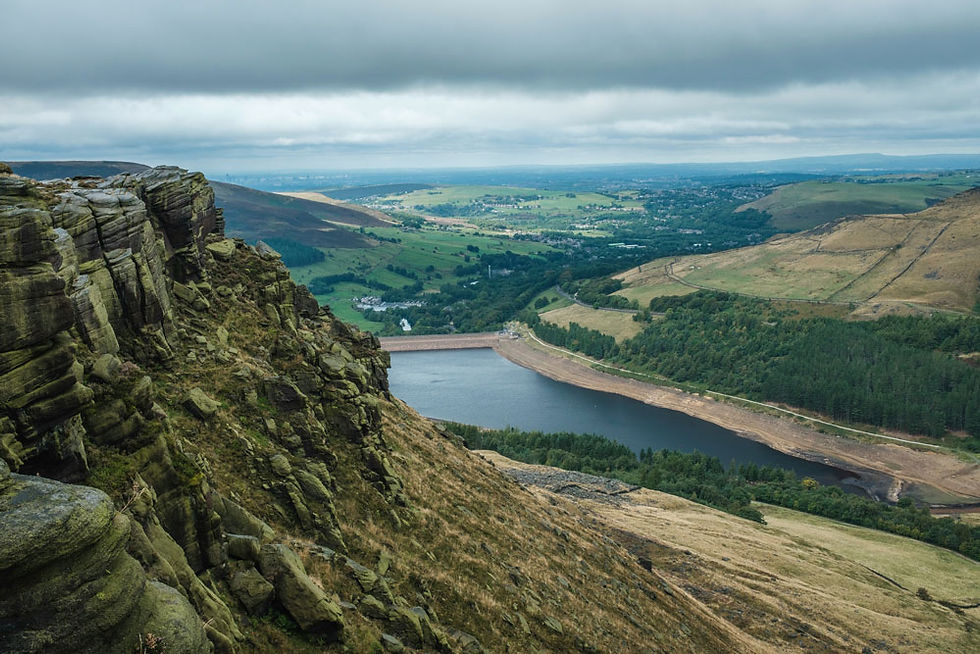
The UK has 273 major reservoirs which hold roughly 90% of the UK's total water storage capacity. That's 14.4 trillion litres of water when full.
Low Reserves
June 2025 reservoirs nationwide were only 76% full. Lower than during the severe drought of 2022, when levels stood at 77%. Ground water levels were reported to be "below normal".

Water Shortfall
There will be a water supply shortfall by 2050. England will be short 5 billion litres every day if new reservoirs are not rapidly constructed.

UK Data Centres
There are 520+ operational data centres in the UK. The UK is currently the largest market for data centres in western Europe.

Drought
Since 2001 the UK has had severe droughts every 5 years, predicted to become every 3 years with climate change.

Indirect water use
Water used directly for cooling is what most data centre operators and environmentalists focus on. But the largest source of water usage is actually electricity generation. Fossil fuel and nuclear power plants all require water to generate steam for turbines. Even hydroelectric power involves some water loss from reservoirs. Data centres require huge amounts of electricity for their power hungry servers, compounding the environmental strain. UK data centres use around 233 billion litres per year.
Why can't data centres use seawater?
The main reason is the type of cooling system. With evaporative systems, water is recycled a few times to help cool the servers. However, over time, this process leaves behind salt, bacteria, and mineral deposits. These deposits can cause clogs and corrode equipment. So new water is continually added to the system and over-cycled water is discharged as wastewater.
For the same reasons fresh water is dishcarged - saltwater would leave behind salt and bigger mineral deposits as it evaporates during cooling. This could create a toxic waste problem when used in industrial quantities.


The world’s first wind-powered underwater datacentre
This new demonstration datacentre has started operations off the coast of Shanghai, as China presses forwards with solutions for energy challenges created by the country’s AI growth. The datacentre is submerged 10 metres below the surface of the water and is powered by a nearby offshore windfarm. The Chinese government explains this new kind of datacentre reduces power consumption by more than one-fifth compared with land-based datacentres.
That is because as well as being powered by renewable energy, its overall energy demands are less because of the natural cooling effect that comes from being submerged in seawater.
Water
416 Million Litres
Per year
A mid sized data centre has the same annual water footprint of about 1,000 UK households
New UK Resevoirs
In a major intervention to secure national water resilience, the UK government has fast-tracked the construction of nine new reservoirs by 2050—marking the first major reservoir builds in over 30 years. To accelerate development, the planning process for the first two locations has been designated as "nationally significant," allowing the Environment Secretary to bypass local red tape. Together, just these first two facilities—the Fens Reservoir (operational by 2036) and the Lincolnshire Reservoir (operational by 2040)—will provide an extra 253 million litres of water per day, shoring up supplies for more than 750,000 homes in England's most water-stressed regions.


AI’s thirst for resources
AI is also a major consumer of water. Data centers rely heavily on water for cooling systems that operate AI. Google’s annual water consumption reaches a staggering 24 million cubic metres - this is enough for everyone in Japan to take a bath!
To compare before AI the UK's tech sector used around 2 Billion litres per year, with AI this is projected to increase to 10 Billion litres by 2030, illustrating the enormous resource strain AI companies place on water systems.
Delete emails, save water
The Environment Agency’s director of water and National Drought Group chair, Helen Wakeham said:
“The current situation is nationally significant, and we are calling on everyone to play their part and help reduce the pressure on our water environment. We are grateful to the public for following the restrictions, where in place, to conserve water in these dry conditions. Simple, everyday choices – such as turning off a tap or deleting old emails – also really helps the collective effort to reduce demand and help preserve the health of our rivers and wildlife.”
As well as more traditional methods of reducing water usage, such as taking shorter showers, using rain water stored in butts for watering plants, and cutting hosepipe use, the government agency is also drawing attention to the enormous demands on utilities caused by growing data storage.
10 Year Impact


Impact on:
Read more about the impact of digital waste on our environment, water, the grid and other resources.

The impact of AI
AI is already being used across UK, from big business, local councils to policing and the NHS. But without clear oversight and clean digital operations, the risks will grow.

Data centres and our water resources
The massive cooling demands of data centres processing our digital waste consume billions of litres of fresh water daily, heavily straining local watersheds and intensifying global water scarcity.

The hidden carbon footprint
Digital waste is far from carbon neutral; it consumes significant electricity and resources.

The relentless expansion of data centres to process our digital waste is placing an unprecedented strain on electricity grids and consuming vast amounts of water for cooling, significantly driving up the global carbon footprint.


